Einstein Probe Detects Unprecedented Cosmic Event: A Likely Intermediate-Mass Black Hole Shredding a White Dwarf
An extraordinary cosmic explosion, detected by China's Einstein Probe (EP) mission (also named Tianguan in Chinese), may mark the first direct observation of an intermediate-mass black hole (IMBH) tearing apart a white dwarf. The discovery, which offers crucial insight into these elusive "seed" black holes, was made possible by the satellite's innovative X-ray telescopes. The results were published as the cover article in the latest issue of Science Bulletin.
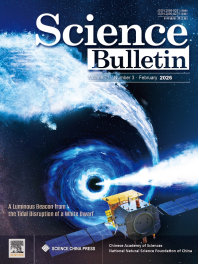
Figure 1 Artist's impression of the Einstein Probe satellite catching an intermediate black hole, tearing apart a white dwarf, and producing a relativistic jet. Image credit: Einstein Probe Science Center, National Astronomical Observatories, CAS / Sci Visual
A Signal in the Noise
The breakthrough came on July 2, 2025, when EP's Wide-field X-ray Telescope (WXT) detected an unusually bright transient source during routine sky surveys. A closer inspection revealed an intriguing anomaly: WXT had detected X-ray emissions from the same location nearly 24 hours before NASA’s Fermi satellite identified the associated gamma-ray bursts.
“The early X-ray emission sets this event apart from typical gamma-ray bursts,” explained Dongyue Li, first author of the study from the EP Science Center at National Astronomical Observatories of China (NAOC). “Normally, gamma-ray bursts begin with a sudden flash of gamma rays, but here, the ‘engine’ powered up in the X-ray band first, indicating something truly unique.”
This discovery prompted a rapid international effort to observe the event in multiple wavelengths. The source was pinpointed to a galaxy located about 8 billion light-years away. EP’s Follow-up X-ray Telescope (FXT) then tracked the object’s dramatic evolution over the following 20 days until undetected.
Extreme Evolution and a Powerful Jet
Around 15 hours after the initial flare, WXT captured intense X-ray flares peaking at a remarkable 3 × 10⁴⁹ erg/s—one of the brightest transient events ever observed. FXT observations revealed an astonishing sequence of events: after a powerful initial burst lasting about one day, the source’s brightness dropped by more than 100,000 times. At the same time, its X-ray spectrum softened, suggesting the emergence of a new radiative component.
The extreme brightness, rapid variability, and emission spanning from X-ray and gamma-ray indicate the presence of a powerful, highly collimated relativistic jet pointed close to the observer’s line of sight. The data suggest the jet had a bulk Lorentz factor of at least 56, comparable to previous jetted TDEs.
“No known gamma-ray burst or outburst from a galaxy exhibits this exact combination of behaviors,” said Wenda Zhang, NAOC associate researcher and co-lead author. “The unique properties of this event defy all known models.”

Figure 2 (a) Comparison of the X-ray light curve of EP250702a (black data points) with other transient sources. These include jetted tidal disruption events (e.g., Sw J1644+57) and ultra-long gamma-ray bursts (e.g., GRB 211024B). EP250702a exhibits unprecedented rapid evolution: its brightness dropped by a factor of over 100,000 within a mere 20 days, far exceeding the decline rate of other comparable events. (b) Temporal evolution trend of the X-ray spectrum of EP250702a. The photon index increased significantly from about 1 in the early phase (indicating a 'hard' spectrum) to above 3 in the later phase (indicating a 'soft' spectrum). This clear 'hard-to-soft' transition, observed for the first time in such an event, suggests the possible emergence of a thermal radiation component at later times. Image credit: Einstein Probe Science Center, National Astronomical Observatories, CAS.
The IMBH-White Dwarf Scenario
The research team proposed that this event likely resulted from an intermediate-mass black hole (IMBH) shredding a white dwarf and launching a relativistic jet. This hypothesis is supported by four key observations: first, an X-ray precursor detected 24 hours before the gamma-ray burst, which is inconsistent with typical gamma-ray burst models; second, the event's extreme brightness and X-ray-to-gamma-ray emission, indicating the presence of a highly collimated relativistic jet; and third, its fast evolution, whose brightness declined by more than five orders of magnitude within 20 days; and forth, the possible emergence of a thermal radiation component at late times, which indicates an accretion disk formed after the tidal disruption.
Compared to typical tidal disruption events (TDEs), this event exhibited earlier X-ray decline, higher jet energy, a much shorter fading timescale (days instead of years), and a peak X-ray luminosity at least an order of magnitude—and up to a hundred times—greater than all known TDEs. Chichuan Jin of NAOC noted, "These features form a coherent physical picture, providing strong support for the IMBH-white dwarf scenario."
Lixin Dai of the University of Hong Kong added, "While similar to TDEs, the key differences in this event suggest a higher likelihood of a white dwarf being disrupted by an IMBH."
In contrast, alternative models such as stellar-mass black hole mergers or the disruption of an ordinary star fail to explain its rapid variability and other unique features.
Wenda Zhang further explained, "The rapid decay combined with extreme luminosity implies that the disrupted object was far denser than an ordinary star. Only an IMBH, with a mass between 10² and 10⁵ solar masses, could tear apart such a compact object without immediately consuming it."
Furthermore, independent data from the Fermi satellite provided additional mass constraints. Jun Yang of Zhengzhou University, a co-first author of the study, stated, "The rapid flux variability suggests a black hole mass of no more than 75,000 solar masses, effectively ruling out a supermassive black hole."
Implications for Astrophysics
If confirmed, this discovery would represent the first unambiguous detection of an IMBH shredding a white dwarf star, offering critical evidence for the existence of the elusive IMBH population. This finding has broader implications for understanding the demography of elusive IMBHs as seed black holes, their growth, and the process by which compact objects are disrupted.
“We are thrilled to see that the Einstein Probe is fulfilling its mission to capture extreme, unpredictable events,” said Weimin Yuan of NAOC, Principal Investigator of EP. “This discovery highlights EP’s unique capability to uncover the most fleeting cosmic phenomena.”
Research Team:
Dr. Dongyue Li and Dr. Wenda Zhang from NAOC, Dr. Jun Yang from Zhengzhou University, and Dr. Jinhong Chen from The University of Hong Kong are the lead authors of the paper. Associate Researcher Dr. Wenda Zhang, Prof. Weimin Yuan, and Researcher Prof. Chichuan Jin from the National Astronomical Observatories, Prof. Lixin Dai from The University of Hong Kong, and Researcher Prof. Chen Zhang from the National Astronomical Observatories are the corresponding authors. The collaboration includes over 40 universities and research institutes, including Anhui Normal University, Sun Yat-sen University, and the University of Science and Technology of China.
Publication: Li, D., et al. 2025, "EP250702a: A Fast-fading, Hyper-luminous X-ray Transient Consistent with an IMBH-White Dwarf Tidal Disruption Event," Science Bulletin, https://doi.org/10.1016/j.scib.2025.12.050
The Einstein Probe Mission: The Einstein Probe (EP) is a space science mission led by the Chinese Academy of Sciences (CAS) in collaboration with the European Space Agency (ESA), the Max Planck Institute for Extraterrestrial Physics (MPE) and the French National Centre for Space Studies (CNES).